
You can be enjoying the dramatic cliffs and white sands of Melasti Beach one minute, then facing a sudden medical problem the next. The Southern Bukit, from Melasti to Ungasan, is famous for its remote villas and pristine coastline—but that isolation brings challenges if you need urgent healthcare. In this guide, you’ll learn exactly how to get fast, safe medical help anywhere along this stretch, what risks are unique to the area, and how to prevent common travel health problems before they start.
Why Medical Help Can Be Harder to Access on the Southern Bukit
Geographic Isolation and Bali’s Road Network
The southern tip of Bali is defined by steep limestone cliffs, winding roads, and scattered development. Melasti Beach itself sits at the bottom of a switchback descent. Nearby Ungasan is a hub for private villas and resorts, but both areas are far from major hospitals. During an emergency, travel time up narrow cliff roads or through ceremony traffic can delay care. Even with ride-hailing apps or hotel drivers, not every vehicle can navigate these steep or poorly lit roads at night.
Limited Local Medical Infrastructure
Unlike Seminyak or Kuta, the Bukit area has few clinics and no major emergency hospital within a short drive. Most local clinics handle minor injuries or routine health issues, but serious illness or trauma often requires transfer to Denpasar or Jimbaran—30 to 60 minutes away depending on traffic. After sunset or during local ceremonies, these times can double.
What This Means for Travelers
If you experience severe symptoms—such as high fever, chest pain, breathing difficulty, confusion, uncontrolled bleeding, or signs of stroke—call 112 for emergency services immediately. For less urgent but still concerning issues (such as moderate infections, dehydration, food poisoning, or minor injuries), mobile healthcare services like Trishnanda Care Centre bring English-speaking doctors and nurses directly to your villa or hotel room for assessment and treatment.
Most Common Medical Problems from Melasti Beach to Ungasan
Accidents: Slips, Falls and Wounds
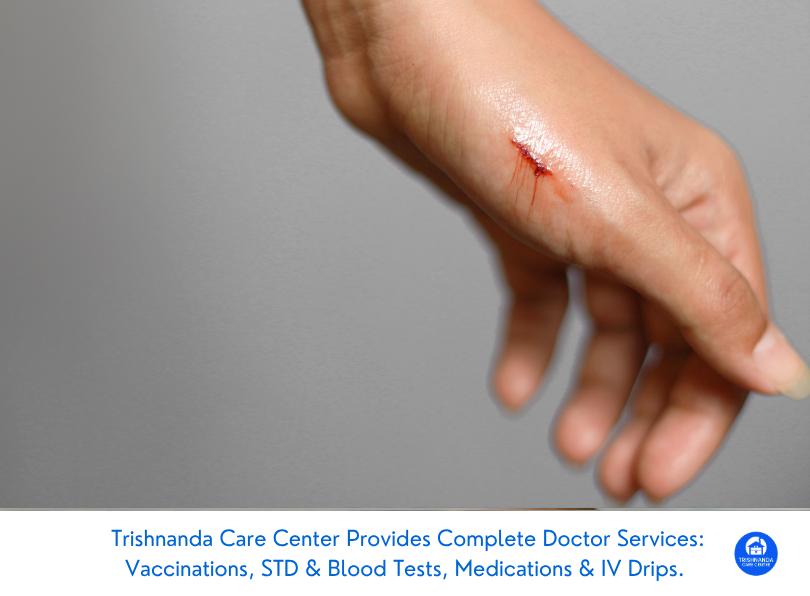
The region’s cliff stairs and slippery stone paths are notorious for falls. Injuries range from minor grazes and sprains to deep lacerations or even fractures. According to the NHS guidance on cuts and grazes, all wounds should be cleaned immediately with fresh water; deeper wounds may require stitches and must be assessed professionally to prevent infection.
If you have a deep cut:
• Apply firm pressure with a clean cloth to stop bleeding.
• Elevate the limb if possible.
• Do not attempt to close the wound yourself with glue or tape.
• Check your tetanus vaccination status; if unsure or if the wound is dirty/rusty, seek medical advice promptly as per NHS tetanus guidance.
• If there is uncontrolled bleeding, loss of consciousness, or signs of shock (pale skin, rapid pulse), call 112 immediately.
For less severe wounds needing assessment (such as cuts that won’t stop bleeding after 10 minutes or show signs of infection), a mobile doctor visit is appropriate.
Sunburn and Heat-Related Illness
Southern Bukit beaches offer little shade. The combination of reflected sunlight from white sand and high humidity increases the risk of severe sunburn and heat exhaustion. According to NHS advice on sunburn and heat exhaustion, symptoms include redness, blistering skin, headache, dizziness, nausea or confusion.
Heatstroke can develop rapidly in Bali’s climate:
• Stop activities immediately at the first sign of heat illness.
• Move into shade or indoors.
• Cool the body with wet towels/fans.
• Drink fluids if you are able.
• Seek urgent help if there is confusion, collapse/fainting, persistent vomiting or temperature above 40°C.
To support rapid recovery from moderate dehydration after sun exposure (when oral fluids aren’t enough), Trishnanda Care Centre can provide hydration therapy delivered directly to your villa. For severe heatstroke symptoms (confusion/unconsciousness/seizures), call 112 first.
For more detailed advice on differentiating between heat exhaustion and heatstroke in Bali’s climate, see our post on recognising these conditions.
Gastrointestinal Illness: Food Poisoning and Bali Belly
Dining at clifftop cafes or beach warungs is part of the experience here—but food hygiene can vary. Sudden vomiting and diarrhoea (“Bali Belly”) are common among visitors. The NHS advises that most cases resolve within a few days with rest and fluids; however:
• If you cannot keep fluids down for over 12 hours
• If diarrhoea contains blood
• If there are signs of dehydration (dry mouth/tongue, dizziness standing up)
seek medical review as IV rehydration may be needed.
To minimise downtime from GI upset in remote areas like Ungasan/Melasti where access to pharmacies is limited, consider Bali Belly IV therapy options delivered by qualified staff.
Insect Bites and Skin Infections
Mosquito bites are common in coastal Bukit areas—especially at dusk—posing risk for dengue fever. Minor bites may become infected if scratched open in humid conditions. According to the NHS on insect bites and cellulitis, seek medical review for:
• Spreading redness/swelling
• Fever/chills
• Pus discharge
These may signal cellulitis—a skin infection that needs antibiotics.
Dengue fever itself requires close monitoring due to risk of complications such as dehydration or bleeding; see WHO dengue factsheet for current global guidance.
Local Risk Factors Unique to Melasti Beach & Ungasan
Steep Terrain and Limited Transport Options
If you have mobility issues or young children in tow, be aware that many villas are built into hillsides with dozens of steps between rooms/pools/car parks. In a medical emergency, this complicates evacuation—especially after dark when lighting is poor.
Delays Due to Ceremonial Road Closures
Balinese religious ceremonies frequently close main roads throughout the Bukit region without much warning. This can add significant delays for ambulances or taxis trying to reach your location quickly.
Wildlife Hazards: Monkeys and Stray Dogs
Ungasan’s temples (including those near Melasti) attract monkeys that occasionally bite when provoked or when food is visible. Stray dogs also roam beach parking areas—both carry rabies risk in Bali. The NHS states that any bite/scratch from these animals warrants immediate wound washing with soap/water for 15 minutes and urgent medical review for rabies vaccination assessment.
How Fast Can Help Reach You? Mobile Doctor Services Explained
Traditional clinics may be closed after hours—and finding transport in remote Ungasan late at night can be difficult. This is where Trishnanda Care Centre’s model comes in: our English-speaking doctors/nurses are available 24/7 for central Bukit areas (including Melasti/Ungasan). There are no extra costs for transportation regardless of location within our service zone.
Trishnanda also provides free island-wide delivery of prescription medications directly to your villa—meaning you do not have to leave your accommodation when unwell.
What does a typical mobile call-out involve?
• Contact via WhatsApp for triage (see details below).
• Doctor/nurse arrives at your villa/hotel (often within an hour).
• On-site assessment with equipment for basic tests (temperature/pulse/blood pressure/oxygen saturation).
• Treatment such as wound cleaning/dressings/IV fluids/injections as needed.
• Prescription medications dispensed on the spot; follow-up arranged if required.
• Rapid escalation/referral arranged if higher-level hospital care is needed.
For more on how this model works in practice in similar remote settings across Bali’s coastlines—including rainy season access issues—see our post on reaching Uluwatu cliffside villas quickly.
Prevention Tips for Travelers Staying Along Southern Bukit
Practical Steps Before Your Trip
• Travel Insurance: Always have comprehensive coverage that includes ambulance evacuation from remote areas.
• Vaccinations: Review recommended travel vaccinations before arrival; rabies pre-exposure vaccine is advised if staying long-term in areas with monkeys/dogs according to CDC Indonesia travel advice.
• Medication: Bring essential prescription medications plus basic first aid supplies (bandages/plasters/oral rehydration salts/paracetamol).
While Onsite: Reducing Your Risk
• Hydration: Drink only bottled water; avoid ice unless you know it is made from treated water.
• Food Choices: Eat only freshly cooked food; avoid raw seafood/meats at remote beach stalls.
• Mosquito Protection: Use repellent containing DEET; sleep under nets where provided.
• Sun Safety: Wear sunscreen (SPF 30+), hats/sunglasses; seek shade during midday hours.
• Footwear: Wear shoes with grip when using beach stairs/cliff paths—even short walks.
• Wildlife Caution: Do not feed monkeys; supervise children closely around stray animals.
• Know Your Location: Save your villa/resort’s exact address/GPS coordinates on your phone—it speeds up any emergency response.
For families with young children prone to falls/slips on stairs common in this region’s architecture, see our advice about managing pediatric accidents in Bali villas which applies equally well here.
Recovery Steps: What Happens After Medical Treatment?
Most non-life-threatening illnesses (such as mild food poisoning/sunburn/minor wounds) resolve within days with proper rest and treatment onsite:
• Rest: Stay hydrated; avoid further sun exposure/activity until feeling better.
• Follow-Up: Monitor symptoms closely—seek repeat evaluation if new fever develops/wounds worsen/dehydration persists.
• Medications: Complete any prescribed antibiotics/courses as directed by your doctor.
• Documentation: Keep all receipts/reports for insurance claims—Trishnanda provides English-language documentation suitable for international insurers.
• Ongoing Support: For prolonged fatigue after infections like dengue or flu (which can last weeks), ongoing support may include IV hydration/nutrient therapy—always under direct doctor supervision.
For more insight into why recovery sometimes takes longer after tropical infections—even after initial symptoms subside—see our explanation about post-viral fatigue following dengue or flu.
If you need further investigations (like blood tests for dengue/CBC) while recovering in your villa along this stretch of coast, Trishnanda offers discreet in-villa lab testing without extra transport fees so you do not need multiple trips offsite during convalescence.
When Should You Seek Urgent Hospital Care?
Mobile healthcare covers most mild-to-moderate illnesses—but some situations need immediate hospital-level intervention:
• Severe chest pain/breathing difficulty
• Sudden confusion/seizures
• Uncontrollable bleeding
• Deep wounds with exposed bone/joint
• Suspected stroke (facial droop/slurred speech)
• Severe allergic reaction (swelling/difficulty breathing)
In these cases call 112 immediately before attempting any other intervention.
Conclusion: Staying Healthy on Bali’s Southern Clifftops
The beauty of Melasti Beach and Ungasan comes with unique health risks due to their isolation—but modern mobile medical teams bridge that gap so you never have to choose between comfort and safety while traveling here. By taking simple prevention steps before arrival and knowing what red flags require professional help fast, you can experience this region confidently.
If you find yourself needing prompt medical attention anywhere between Melasti Beach and Ungasan—or want medication delivered free island-wide—Trishnanda Care Centre offers English-speaking doctors/nurses 24 hours a day with no hidden transport costs even for remote villas.
This content is for general information only and does not constitute medical advice. Always consult a qualified healthcare professional for personalised diagnosis and treatment.
Need urgent help? Message us now via WhatsApp:
Contact Trishnanda Care Centre instantly on WhatsApp