
Jimbaran Seafood Aftermath: Fast Medical Response for Suspected Food Poisoning
The allure of Jimbaran Bay’s renowned seafood dinners is undeniable. Sunset views, fresh catches, and a lively atmosphere draw travelers from across the globe. Yet, as many visitors discover, a memorable meal can sometimes end with a less pleasant souvenir: symptoms of food poisoning. Understanding the risks involved, the steps to take if you become unwell, and how to access reliable medical care in Bali can make all the difference in your recovery.
The Science of Seafood Food Poisoning
What Is Food Poisoning?
Food poisoning is an illness caused by consuming contaminated food or beverages. According to the World Health Organization (WHO), more than 600 million cases of foodborne illnesses occur globally each year. While many cases resolve on their own, some forms can be severe or even life-threatening.
How Does Seafood Become Contaminated?
Seafood is especially vulnerable to contamination due to its aquatic origin and perishable nature. Contamination pathways include:
• Bacterial growth: When seafood is stored at improper temperatures, bacteria such as Vibrio, Salmonella, Shigella, and Escherichia coli can multiply rapidly.
• Viruses: Norovirus and hepatitis A are common viral culprits linked to shellfish harvested from polluted waters.
• Parasites: Raw or undercooked seafood can harbor parasites like Anisakis.
• Toxins: Certain fish accumulate natural toxins (e.g., ciguatera or scombroid poisoning) that are not destroyed by cooking.
Typical Symptoms and Onset
Symptoms vary based on the causative agent but usually include:
• Nausea and vomiting
• Abdominal cramps
• Diarrhea (sometimes bloody)
• Fever and chills
• Headache
• Muscle aches
The onset can range from minutes (with preformed toxins) to several days after eating contaminated seafood.
Why Are Some Cases More Severe?
Immunocompromised individuals, pregnant women, young children, and older adults are at higher risk for complications such as dehydration, kidney failure (Hemolytic Uremic Syndrome), or invasive bacterial infections. In tropical climates like Bali’s, dehydration can set in rapidly due to increased fluid loss from vomiting and diarrhea.
Local Risk Factors: Why Bali Travelers Are Vulnerable
Bali’s vibrant food scene is one of its chief attractions. However, local conditions can amplify risks:
Warm Climate
High temperatures accelerate bacterial growth in improperly stored seafood. Even short lapses in the cold chain can render seafood unsafe.
Popularity of Open-Air Dining
Many Jimbaran beachside eateries operate outdoors with minimal refrigeration or temperature control for displayed seafood. Fluctuating temperatures increase contamination risk.
Water Quality Concerns
Some seafood is harvested from local waters that may be exposed to untreated wastewater. Shellfish are particularly susceptible to filtering and accumulating viruses or bacteria.
High Turnover and Tourist Volume
Busy periods strain kitchen staff and facilities. Rapid service requirements may lead to rushed food handling or insufficient cooking times.
Limited Regulatory Oversight
While many restaurants maintain high standards, not all establishments adhere strictly to international food safety guidelines.
Prevention Tips for Bali Travelers
You can’t guarantee every meal is risk-free, but you can reduce your chances of falling ill with these actionable precautions:
Choose Your Venue Wisely
• Opt for reputable restaurants with visible cleanliness standards.
• Look for venues with high customer turnover fresh ingredients are more likely.
• Avoid empty eateries at off-peak hours; food may have been sitting out too long.
Inspect Before You Eat
• Fresh seafood should smell like the ocean not sour or “fishy”.
• Shellfish shells should be tightly closed before cooking; discard any that remain open after cooking.
• Avoid raw or undercooked dishes unless you’re confident in sourcing and preparation (especially oysters, mussels, sushi).
Watch Out for Cross-Contamination
• Check that raw seafood is stored separately from cooked foods.
• Utensils and cutting boards should be sanitized between uses.
Mind Your Water Source
• Only drink bottled or filtered water.
• Avoid ice unless it’s made from purified water.
• Wash hands thoroughly before eating; carry alcohol-based hand sanitizer when traveling.
Consider Dietary Supplements or Prophylactics
Some travelers use probiotics before and during travel to bolster gut flora. However, consult your healthcare provider first.
Recognizing Food Poisoning: When Is It Serious?
Most mild cases resolve within a few days with rest and hydration. However, seek urgent medical care if you experience:
• Persistent vomiting preventing fluid intake
• Bloody diarrhea
• High fever (>38.5°C)
• Severe abdominal pain
• Signs of dehydration: dry mouth, sunken eyes, reduced urination
• Confusion or drowsiness
• Symptoms lasting over 48 hours without improvement
Especially in Bali’s heat, dehydration can escalate rapidly prompt intervention is crucial.
Immediate Actions After Suspected Food Poisoning
If you suspect you’ve consumed contaminated seafood:
• Rest: Lie down in a cool environment.
• Rehydrate: Sip clear fluids like oral rehydration solutions (ORS), coconut water, or clear broths. Avoid alcohol or caffeine.
• Monitor Symptoms: Take note of what you ate, when symptoms started, and their progression.
• Avoid Anti-Diarrheal Medications Unless Advised: These may prolong infection by trapping bacteria or toxins inside your gut.
• Contact a Medical Provider if moderate-to-severe symptoms develop (see above).
Trishnanda Care Centre: Fast Mobile Medical Response Across Bali
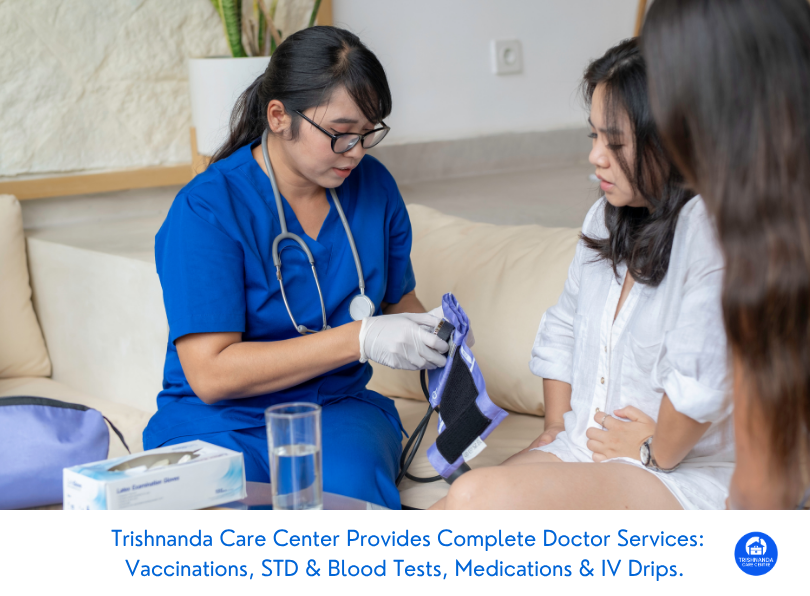
For travelers struck by sudden illness far from their home country, reliable English-speaking medical support is invaluable. Trishnanda Care Centre delivers just that rapid professional healthcare wherever you are staying in Bali.
24/7 Doctor-on-Call & Nurse Visits
Our Doctor-on-Call service ensures that a licensed physician or nurse can reach your villa, hotel room, or guesthouse at any hour day or night across central Bali areas including Jimbaran.
Mobile IV Packages
Dehydration is one of the most serious complications of food poisoning. Trishnanda Care Centre offers convenient hydration and food intolerance IV therapies directly at your location no need for stressful travel while unwell.
Our mobile IV solutions contain balanced electrolytes and fluids to restore hydration quickly. For additional support (such as severe nausea), medications may be administered as needed by our licensed team.
In-Villa Lab Tests
In certain cases such as severe symptoms or prolonged illness additional diagnostics may be required to rule out other tropical diseases (like dengue fever) or confirm infection type. Trishnanda Care Centre offers discreet in-villa lab testing for peace of mind.
English-Speaking Medical Team
All our doctors and nurses are fluent in English and trained according to international healthcare standards no miscommunication about your symptoms or treatment options.
Free Island-Wide Delivery & No Hidden Transportation Fees
When you need medication or rehydration supplies delivered fast even outside central tourist hubs we provide free island-wide delivery with no extra costs for transportation.
Recovery Steps After Food Poisoning in Bali
Recovering fully after an episode of foodborne illness requires attention not only during acute symptoms but also in the days following:
Continue Hydration & Gradual Diet Progression
Start with clear liquids until vomiting subsides. Gradually introduce bland foods such as rice porridge (bubur), bananas, toast, boiled potatoes, and steamed chicken as tolerated.
Avoid dairy products initially; temporary lactose intolerance is common after gastroenteritis due to damage to intestinal lining cells.
Rest & Monitor Symptoms
Give yourself time to recuperate fully before resuming strenuous activities or travel plans. If new symptoms arise (fever spikes again, abdominal pain worsens), seek further evaluation.
Consider Probiotics During Recovery
Some evidence suggests that certain probiotics may help restore healthy gut flora after infection; consult your healthcare provider before starting supplements.
Follow Up With Your Doctor If Necessary
If symptoms persist beyond three days or if you belong to a higher-risk group schedule a follow-up consultation with one of our doctors for personalized advice and further testing if needed.
Long-Term Prevention: Building Safer Habits For Future Meals
While one bout of food poisoning shouldn’t scare you away from Bali’s culinary delights forever, it’s worth adopting ongoing habits:
• Trust your instincts; if something tastes off or looks poorly prepared, don’t eat it.
• Wash hands regularly before meals and after using toilets.
• Encourage traveling companions (especially children) to do the same.
For those who frequently experience digestive upsets while traveling or have underlying GI issues consider discussing preventive strategies with a doctor before your trip. Our Bali Belly resource provides further insights into traveler’s diarrhea prevention and management specific to Bali’s conditions.
Why Choose Trishnanda Care Centre?
Choosing where to seek care isn’t just about proximity it’s about trustworthiness and expertise tailored for travelers’ needs:
• 24/7 Mobile Reach: From Jimbaran beachfront hotels to remote villas inland, we come directly to you around the clock.
• English-Speaking Staff: Communication barriers eliminated; clear explanations every step of the way.
• Comprehensive In-Villa Services: From IV therapies to medical consultations and lab testing, all without leaving your accommodation.
• Free Island-Wide Delivery: Medications and supplies brought directly where they’re needed most, no hidden charges.
• Trusted By Locals & Tourists Alike: Stringent hygiene standards; positive patient outcomes at every stage of care.
Take Action Now If You Need Help
If you’re experiencing sudden vomiting, diarrhea, weakness or simply want professional advice after an uneasy meal contact Trishnanda Care Centre day or night for fast response across Bali’s central areas including Jimbaran Bay. Our English-speaking doctors are ready 24/7 to ensure your swift recovery so you can enjoy the rest of your stay safely.
Reach out now via WhatsApp for immediate assistance:
Chat With Trishnanda Care Centre
This content is for general information only and does not constitute medical advice. Always consult a qualified healthcare professional for personalised diagnosis and treatment.