
What is Bali Belly? Understanding the Science
The Medical Reality Behind “Bali Belly”
“Bali Belly” is the colloquial term for traveler’s diarrhea experienced by visitors to Bali and other parts of Southeast Asia. Medically, it’s most often caused by ingesting water or food contaminated with bacteria (like Escherichia coli), viruses (such as norovirus or rotavirus), or parasites (like Giardia). The resulting symptoms can include:
• Sudden onset of watery diarrhea
• Abdominal cramps and pain
• Nausea and vomiting
• Mild fever
• Bloating and excessive gas
While the term “Bali Belly” makes it sound like a local oddity, the condition is essentially the same as traveler’s diarrhea experienced worldwide. According to the Centers for Disease Control and Prevention (CDC) and World Health Organization (WHO), 30-70% of travelers experience some form of gastrointestinal illness, most often within the first week of arrival in a new country.
How Does Bali Belly Happen?
The gastrointestinal tract is home to a complex community of bacteria known as the gut microbiome. When you travel, sudden exposure to new food handling practices, water sources, and unfamiliar pathogens can disrupt this balance. The most common culprits include:
• Bacterial contamination: Frequently E. coli, but also Salmonella, Shigella, and Campylobacter.
• Viral infections: Norovirus is highly contagious and can spread rapidly in group settings or resorts.
• Parasites: Less common but possible causes include Giardia and Cryptosporidium.
Symptoms usually begin 6-72 hours after exposure and last from one to five days, though some cases can linger longer depending on the cause.
Why Is Bali Belly So Common in Bali?
Local Risk Factors Explained
Bali’s warm climate, bustling food markets, popular street food culture, and high tourist turnover create an environment where gastrointestinal bugs can flourish. Here are several risk factors that make Bali particularly notable for travel-related stomach upsets:
Water Quality
Although Balinese tap water is not considered safe for drinking by international standards, it often finds its way into ice cubes, salads washed in tap water, or even fruit juices from street vendors.
Food Safety Practices
Local food vendors may not always adhere to strict food safety protocols familiar to Western travelers. Inadequate refrigeration, improper handwashing, or cross-contamination are common sources of infection.
High Tourist Density
With millions of visitors each year cycling through hotels, resorts, hostels, and homestays, infectious agents have more opportunities to spread among people who may not have local immunity.
Changing Diets
Many travelers indulge in unfamiliar foods that are richer or spicier than what their digestive systems are used to. This alone can cause some stomach upset, even without infection.
The Truth About Viral TikTok Cures: What Science Says
Debunking Common TikTok Myths
Social media platforms like TikTok have democratized information sharing but they’ve also amplified myths and misinformation about treating Bali Belly. Here are some of the most viral “cures” circulating online:
1. Activated Charcoal Pills
The Claim: Swallowing activated charcoal will “absorb toxins” and cure Bali Belly overnight.
The Science: Activated charcoal can bind certain drugs or poisons in emergency settings but has little effect on bacteria or viruses causing most cases of traveler’s diarrhea. Studies show no significant benefit in speeding recovery or reducing severity for infectious gastroenteritis. Overuse can cause constipation or interfere with absorption of medications.
2. Chugging Coca-Cola or Sprite
The Claim: Sugary sodas “kill germs,” “settle your stomach,” or “rehydrate you fast.”
The Science: Carbonated soft drinks do not kill pathogens responsible for Bali Belly. High sugar content can worsen diarrhea by pulling more water into your gut through osmosis a process called osmotic diarrhea potentially exacerbating dehydration rather than relieving it.
3. Shot of Local Spirits (Arak/Alcohol)
The Claim: Drinking local spirits will “sterilize your stomach.”
The Science: Alcohol does not sterilize your gut from pathogens at safe-to-consume levels. Drinking alcohol can irritate your gastrointestinal lining and increase fluid loss through vomiting or diarrhea making symptoms worse.
4. Starving Yourself Until Symptoms Pass
The Claim: Fasting gives your stomach a break and helps you recover faster.
The Science: While heavy meals should be avoided during acute illness, ongoing fasting is not recommended. Your body needs energy to fight infection; gentle foods like rice porridge (bubur), bananas, toast, or boiled potatoes are tolerated best during recovery.
5. DIY Antibiotics or Self-Medication
The Claim: Taking leftover antibiotics from a previous illness will kill whatever’s making you sick.
The Science: Unsupervised use of antibiotics is strongly discouraged by every major health authority due to risks of resistance, side effects, and incorrect diagnosis (most cases are viral). Antibiotics should only be prescribed by a qualified medical provider based on specific symptoms and risk factors.
6. Over-the-Counter Anti-Diarrheals for All Cases
The Claim: Loperamide (Imodium) stops all types of diarrhea safely.
The Science: Loperamide may help reduce symptoms in mild cases but should not be used if you have high fever or bloody stools it may trap harmful bacteria inside your gut and increase complications. Always check with a healthcare professional before use.
What Actually Works? Evidence-Based Recovery Steps
Immediate Steps If You Develop Symptoms
If you start experiencing symptoms of Bali Belly while in Bali:
1. Hydration is Priority
Diarrhea causes rapid fluid loss leading to dehydration a serious risk in tropical climates like Bali’s where heat accelerates water loss through sweat as well. The World Health Organization recommends Oral Rehydration Solution (ORS): a precise mix of clean water, salts (sodium/potassium chloride), and glucose that helps your body absorb fluids efficiently.
How to Hydrate Safely
• Use commercially available ORS packets dissolved in bottled water (never tap).
• If ORS isn’t available, drink clear broths or coconut water.
• Avoid sodas, caffeinated drinks, dairy products, and fruit juices during acute symptoms.
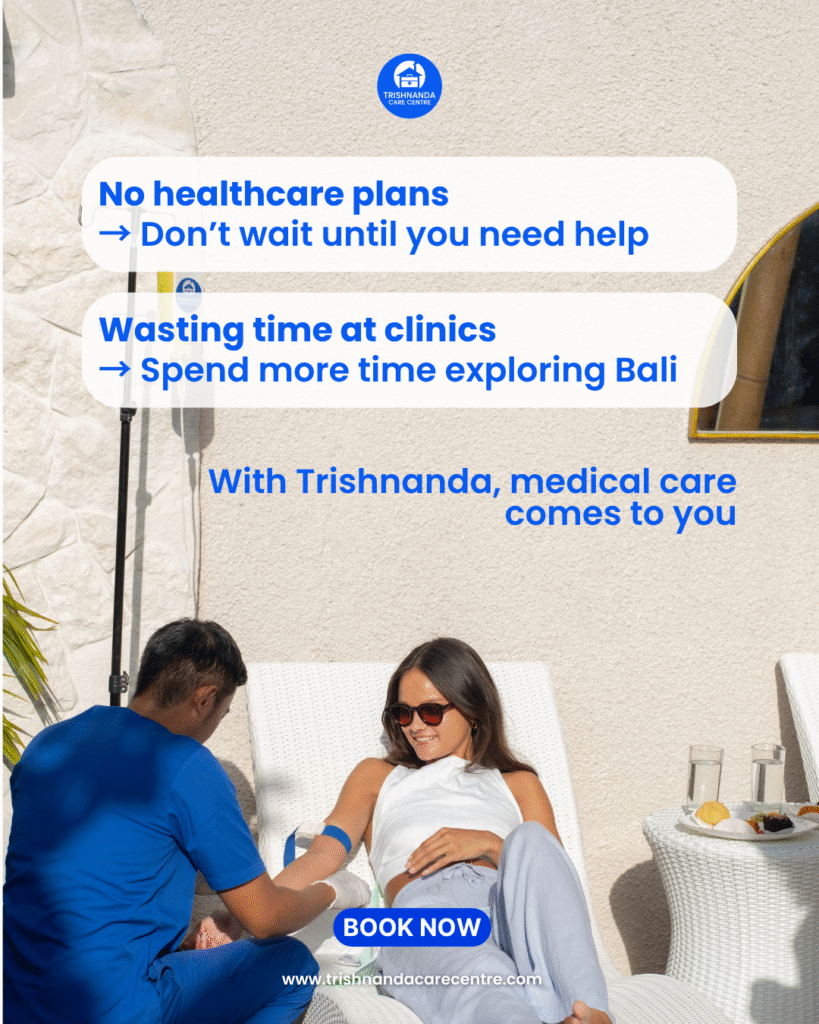
For those unable to keep fluids down due to vomiting or severe dehydration symptoms (dizziness, rapid heartbeat), mobile IV hydration therapy can be administered safely at your accommodation by professionals at Trishnanda Care Centre.
2. Eat Lightly But Don’t Starve
Begin eating again as soon as you’re able start with bland foods such as white rice (nasi putih), bananas (pisang), plain toast, applesauce, steamed chicken breast or crackers. Avoid fatty, spicy foods until fully recovered.
3. Rest As Much As Possible
Your body needs energy to fight infection; try to avoid strenuous activities until symptoms have fully resolved.
4. Wash Hands Thoroughly
Wash hands with soap after using the toilet and before eating this prevents reinfection or spreading germs to others in your group.
When To Call a Doctor
Seek professional medical advice if you experience:
• High fever (>38°C)
• Blood in stools
• Persistent vomiting preventing fluid intake
• Signs of dehydration: dry mouth/tongue; little/no urination; dizziness; rapid heartbeat
• Symptoms lasting more than three days despite self-care
Trishnanda Care Centre offers 24/7 doctor-on-call services with English-speaking doctors and nurses who can visit your villa anywhere in central Bali no need to brave traffic when feeling unwell.
Prevention Tips: How Travelers Can Reduce Their Risk
While no strategy offers perfect protection against Bali Belly when traveling abroad, these evidence-based tips significantly reduce risk:
1. Only Drink Bottled or Filtered Water
Never drink tap water including ice cubes unless you know they’re made from purified sources. Use bottled water for brushing teeth as well.
2. Wash Hands Frequently
Hand hygiene remains one of the most effective ways to avoid infection. Carry alcohol-based hand sanitizer for times when soap and water aren’t accessible.
3. Choose Foods Carefully
• Opt for hot foods cooked fresh before serving.
• Avoid raw salads unless you prepare them yourself using purified water.
• Peel fruits yourself rather than buying pre-cut options from street vendors.
4. Be Cautious With Street Food
Street food is one of Bali’s culinary highlights but comes with increased risk due to variable hygiene standards:
• Eat where locals eat high customer turnover means fresher food.
• Observe how food is handled before ordering.
5. Consider Probiotic Supplements
Some studies suggest that taking probiotics before travel reduces incidence/duration of traveler’s diarrhea by supporting healthy gut flora but results are mixed and not guaranteed protection.
6. Travel Vaccinations & Pre-travel Consultations
Certain vaccines such as hepatitis A/Typhoid may be recommended prior to travel; consult with healthcare providers before departure for tailored advice based on your itinerary and health status.
At Trishnanda Care Centre we offer pre-travel tests and vaccinations delivered directly to your accommodation no extra transportation charges across the island.
What Makes It Worse? Common Mistakes Travelers Make
Even well-intentioned travelers sometimes make things worse by following incorrect advice:
Ignoring Early Symptoms
Brushing off symptoms often leads to worsened dehydration especially concerning in children or older adults who dehydrate quickly.
Using Unregulated Medications
Buying antibiotics over-the-counter without prescription increases risk of resistance/future complications without targeting the actual cause of illness.
Over-relying on Electrolyte Drinks With Excess Sugar
Commercial sports drinks often contain too much sugar relative to sodium/potassium levels needed during acute diarrhea stick with WHO-recommended oral rehydration formulas instead.
Resuming Alcohol & Caffeine Too Soon
Both alcohol and caffeine worsen dehydration; wait until fully recovered before indulging again.
Professional Support: When & How To Seek Help In Bali
If self-care isn’t enough or if you’d simply prefer peace of mind a professional assessment ensures prompt recovery while minimizing complications:
Mobile Healthcare Solutions for Travelers
Trishnanda Care Centre provides comprehensive mobile healthcare services throughout central Bali including:
• In-villa doctor consultations
• Nurse visits for medication administration
• On-site IV hydration therapy (Hydration IV)
• Custom-tailored Bali Belly treatment packages including anti-nausea medication
• In-villa laboratory testing for stool analysis if symptoms persist beyond expected duration
Our free island-wide delivery ensures any medications prescribed reach your doorstep quickly so you don’t have to leave your villa while unwell especially valuable during acute attacks when traveling across town isn’t practical or safe.
We also offer specialized therapy packages such as Bali Belly Mom Care IV Therapy for expecting mothers who require extra support during recovery without unnecessary medications.
All services are provided by English-speaking doctors/nurses certified locally and internationally so there’s never a language barrier during stressful times abroad.
Trust Medical Evidence Over Social Media Trends
Traveling through Bali should be about enjoying its vibrant culture not worrying about questionable online cures when illness strikes unexpectedly. Most cases of Bali Belly resolve within days with proper hydration/rest—but evidence-based care speeds recovery while preventing serious complications like dehydration.
Avoid risky TikTok trends trust science-backed recommendations instead:
• Prioritize oral rehydration over sugary sodas/alcohol.
• Eat lightly but don’t fast unnecessarily.
• Only use antibiotics under medical supervision.
• Seek professional help if severe symptoms occur or if you want recovery support delivered discreetly wherever you’re staying.
At Trishnanda Care Centre we’re committed to keeping travelers safe and comfortable throughout their journey on this beautiful island.
For urgent support anywhere in central Bali including after-hours emergencies contact our team via WhatsApp any time for fast response from English-speaking doctors/nurses: Message us now
This content is for general information only and does not constitute medical advice. Always consult a qualified healthcare professional for personalised diagnosis and treatment.